
How to Choose a Sealcoating Company in Southwest Florida
Why Choosing the Right Sealcoating Contractor Matters
Sealcoating involves applying a protective coating over existing asphalt to help reduce damage from sunlight, moisture, and everyday exposure. It can also improve the pavement’s color and provide a more uniform appearance.
Nevertheless, sealcoating is not a solution for every pavement problem. Deep cracks, widespread potholes, drainage issues, and structural failures may require repairs before a coating can be applied. A responsible contractor should inspect the surface and explain which services are appropriate.
Southwest Florida presents particular maintenance challenges. Strong ultraviolet exposure can contribute to asphalt oxidation, while heavy rain can interfere with preparation and curing. Frequent vehicle traffic also places additional demands on parking lots and driveways.
A qualified sealcoating company understands these conditions and adjusts its recommendations accordingly. Rather than promising a permanent solution, the contractor should explain what sealcoating can accomplish, what repairs may be necessary, and how routine maintenance can help preserve the surface.
Verify Licensing, Insurance, and Business Credentials
One of the first steps in evaluating a contractor is checking its business credentials. A professional appearance and a well-equipped truck are not enough to establish that a company is qualified to perform the work.
Check Applicable Licensing Requirements
Florida’s contractor licensing requirements depend on the type of work being performed and the jurisdiction involved. Sealcoating alone may be treated differently from more extensive paving, resurfacing, or construction work.
Ask the contractor which licenses or registrations apply to the proposed project. If the company claims to hold a particular credential, request the license number and verify it through the appropriate state or local government authority.
For properties in Naples, Fort Myers, Cape Coral, and Bonita Springs, confirm whether local business tax receipts, permits, or additional requirements apply to the specific work. Requirements can vary by location and project scope.
A trustworthy contractor should answer these questions clearly instead of dismissing them as unnecessary paperwork.
Confirm General Liability Insurance
Accidents can happen during pavement preparation and coating application. Equipment may damage landscaping, vehicles, curbs, or nearby property, making insurance an important consideration.
Request a current certificate of general liability insurance and confirm that the policy is valid for the scheduled project. Depending on the contractor’s operations and the job requirements, workers’ compensation coverage may also be relevant.
For commercial property owners and property managers, ask whether the contractor can meet any insurance limits or documentation requirements specified in the service agreement.
Do not rely solely on verbal assurances. Proper documentation provides a clearer understanding of the company’s coverage and helps you make an informed decision.
Evaluate Business Reputation and Experience
Look for a contractor with a verifiable business presence, a consistent service history, and experience handling projects similar to yours.
Ask how long the company has been operating in Southwest Florida and whether it regularly serves your city. A contractor familiar with local weather patterns and property needs may be better prepared to schedule work around rain, heat, and traffic demands.
Recent customer reviews, references, and photographs of completed projects can help you assess reliability. For larger commercial jobs, request references from property managers or business owners with comparable pavement areas.
Inspect the Equipment and Materials
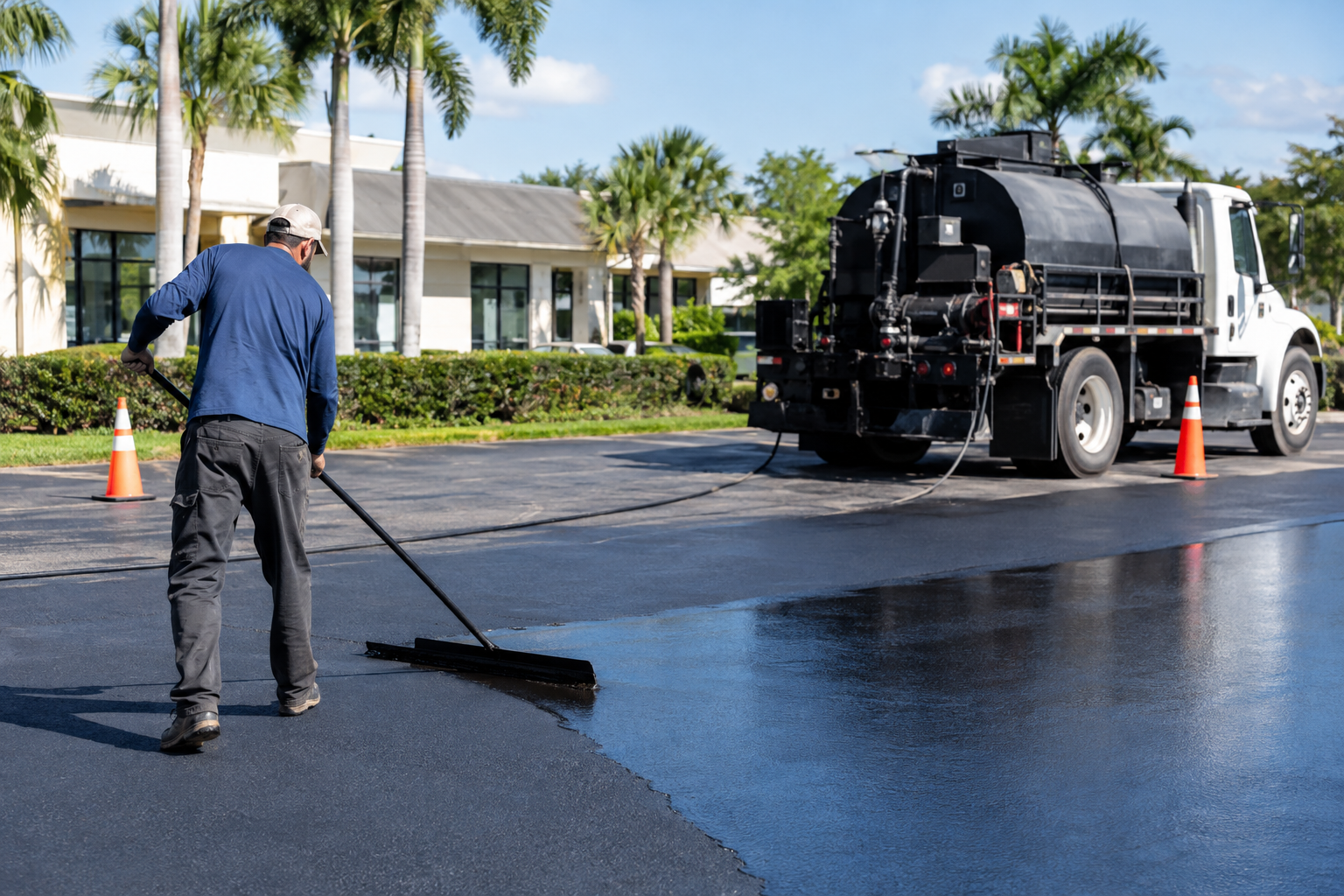
The licensing, insurance, and equipment checks that separate a legitimate sealcoating company from a truck with a tank. Written for Naples, Fort Myers, Cape Coral, and Bonita Springs owners.
Equipment is an important part of professional sealcoating because the quality of preparation and application can affect the finished surface.
Look for Appropriate Application Equipment
Professional contractors use equipment suited to the size and condition of the pavement. Depending on the project, this may include commercial spray systems, squeegees, blowers, crack-cleaning tools, and equipment for mixing and handling coating materials.
Ask how the contractor plans to clean the surface, remove debris, address cracks, and apply the coating evenly. For a large parking lot, the equipment and crew should be appropriate for completing the job efficiently without sacrificing preparation.
A company does not necessarily need the largest truck to deliver quality work. What matters is whether its equipment is properly maintained, suitable for the project, and operated by people who understand the application process.
Ask About Sealcoating Products
Contractors may use different types of asphalt coating products, and the correct choice depends on the surface, traffic conditions, product specifications, and intended use.
Ask which product will be applied, whether it is appropriate for your pavement, and what preparation or curing conditions the manufacturer recommends. The contractor should be able to explain its product selection without making unrealistic promises.
Be cautious of vague descriptions such as premium coating without any supporting product information. You should know what you are paying for and whether the proposed materials are suitable for your property.
Understand Surface Preparation
Preparation is one of the most important stages of a successful sealcoating project. Dust, loose debris, oil contamination, vegetation, and moisture can interfere with adhesion.
A professional contractor should explain how the crew will clean the asphalt and identify areas that need additional attention. Oil spots may require specialized treatment, while cracks may need to be cleaned and filled using an appropriate material before coating.
If the contractor intends to apply a coating directly over a dirty, wet, or deteriorating surface, ask why. Skipping necessary preparation can compromise the finished result and lead to premature wear.
Compare Written Estimates Carefully
Price matters, but the lowest estimate is not automatically the best value. Two contractors may quote different amounts because they include different preparation methods, repair services, materials, or application procedures.
Request written estimates from at least two or three qualified providers when practical. Each estimate should describe the proposed work in enough detail to make an accurate comparison.
Look for the following information:
- Total pavement area to be treated.
- Surface cleaning and preparation procedures.
- Crack filling and other repairs, including exclusions.
- Product type and application method.
- Number of coats, where specified by the product and project requirements.
- Traffic restrictions and expected curing time.
- Project schedule and weather-related contingencies.
- Cleanup responsibilities and protection for nearby property.
- Payment terms and applicable warranty conditions.
A detailed estimate reduces the likelihood of misunderstandings once work begins.
Be especially cautious when a contractor provides a very low price but cannot explain what is included. The company may be excluding important repairs or planning to use a different application approach than you expect.
Recognize Warning Signs Before Signing
A dependable contractor should make the process straightforward and provide reasonable answers to your questions. Several warning signs deserve additional scrutiny.
First, be careful with unusually aggressive sales tactics. Statements that a discount is available only if you sign immediately can make it difficult to compare options properly.
Second, avoid contractors who refuse to provide written estimates, insurance documentation, or clear business information. Legitimate businesses should understand why customers want to verify their qualifications.
Third, question guarantees that sound too good to be true. Sealcoating cannot eliminate all future cracking, prevent every form of pavement damage, or repair an unstable asphalt base.
Finally, watch for unclear payment arrangements. Understand the deposit, progress payments, and final payment requirements before signing. For substantial commercial projects, document the scope of work and any changes in writing.
A contractor’s willingness to answer questions and explain limitations can be just as important as the initial quote.
Consider Local Experience in Naples and Nearby Cities
Southwest Florida communities share a warm climate, but properties have different maintenance needs depending on traffic, drainage, shade, pavement age, and exposure.
In Naples, residential driveways and commercial parking areas may require different maintenance schedules. A Naples paving company or sealcoating specialist should distinguish between routine surface protection and repairs that require more extensive paving work.
In Fort Myers, commercial properties may need careful scheduling to limit disruption to customers, employees, and deliveries. Contractors should explain how they will manage traffic and keep treated areas clear during application and curing.
In Cape Coral, driveway condition, drainage, and existing surface deterioration are important considerations. The contractor should inspect the asphalt rather than assuming every driveway is ready for coating.
In Bonita Springs, property owners may need to coordinate work around seasonal occupancy, business operations, or homeowners’ association requirements.
Choose a sealcoating company that understands your property’s specific requirements instead of relying on a one-size-fits-all proposal. Local references and examples of similar projects can help establish whether the contractor has relevant experience.
Ask About Scheduling, Weather, and Curing
A well-planned project accounts for weather conditions and the time required for the coating to dry and cure.
Southwest Florida’s rain and humidity can affect scheduling, while high temperatures and direct sunlight can influence application conditions. The contractor should follow the product manufacturer’s recommendations and avoid applying materials when conditions are unsuitable.
Ask how the company handles unexpected rain, delays, or changes in the forecast. You should also receive clear instructions about when vehicles and pedestrians can return to the treated area.
Do not assume the pavement is ready for traffic simply because the surface looks dry. Actual reopening times depend on the coating, weather, pavement conditions, and manufacturer guidance.
For businesses, discuss temporary closures, traffic cones, signage, and access arrangements before the scheduled date. Planning these details in advance helps prevent avoidable interruptions and protects the finished work.
Review the Warranty and Maintenance Recommendations
Before hiring a sealcoating company, ask whether the project includes a written workmanship warranty. Read the terms carefully to understand what is covered, how long the coverage lasts, and which conditions are excluded.
A warranty may not cover damage caused by structural pavement failure, heavy vehicle use, standing water, or other conditions outside the contractor’s control. Ask for clarification if the terms are vague.
You should also receive practical maintenance recommendations. These may include keeping vehicles off the surface until the specified time has passed, monitoring new cracks, addressing drainage concerns, and avoiding unnecessary chemical spills.
Sealcoating frequency should depend on the condition of the asphalt, traffic levels, product recommendations, and previous maintenance. Applying a new coating too frequently is not necessarily beneficial, particularly if the existing surface is unsuitable for another application.
A responsible contractor will prioritize the pavement’s actual condition instead of automatically recommending the same schedule for every property.
Make Your Final Decision With Confidence
Choosing a sealcoating company requires more than comparing prices or judging the appearance of its equipment. The best decision comes from checking qualifications, confirming insurance, evaluating materials, reviewing preparation methods, and understanding the written estimate.
Property owners in Naples, Fort Myers, Cape Coral, and Bonita Springs should prioritize contractors who communicate clearly, account for local weather, and explain when repairs are needed before coating begins.
Take time to compare proposals and ask questions before authorizing the work. A contractor who provides transparent documentation and realistic expectations can help you protect your investment and plan future pavement maintenance more effectively.
Whether you need to refresh a residential driveway or maintain a busy commercial parking lot, choosing the right sealcoating company is an important part of keeping asphalt functional, attractive, and easier to maintain over time.
Frequently Asked Questions
How do I choose a reliable sealcoating company in Southwest Florida?
Look for a company that provides written estimates, appropriate insurance documentation, suitable equipment, clear preparation procedures, and verifiable customer references. Compare the scope of work and materials rather than choosing solely by price.
Does a sealcoating company need a license in Florida?
Licensing requirements depend on the type of work and the applicable local rules. Asphalt coating and sealing may be treated differently from structural construction or extensive paving work. Check with the relevant local authority to confirm whether a license, permit, or business tax receipt is required for your specific project.
How much does professional sealcoating cost?
The cost depends on the size of the pavement, its condition, preparation requirements, repairs, materials, and application method. Request written estimates from multiple contractors to compare pricing and services accurately.
How long should I wait before driving on freshly sealcoated asphalt?
The waiting period depends on the product, weather conditions, and application specifications. Follow the contractor’s instructions and the manufacturer’s recommendations before allowing vehicles or pedestrians back onto the surface.
Is sealcoating enough to repair damaged asphalt?
No. Sealcoating protects suitable asphalt surfaces but does not repair deep potholes, structural failures, or significant drainage problems. Necessary repairs should be evaluated and completed before coating when appropriate.
How often should asphalt be sealcoated in Southwest Florida?
There is no single schedule that works for every property. The appropriate interval depends on pavement condition, traffic, weather exposure, previous treatments, and product recommendations. A qualified contractor can assess the surface and recommend a suitable maintenance plan.
What should a sealcoating estimate include?
A detailed estimate should identify the pavement area, preparation procedures, coating materials, included repairs, application scope, scheduling, curing instructions, payment terms, and applicable warranty conditions.
Why is local experience important when hiring a sealcoating company?
A contractor familiar with Naples, Fort Myers, Cape Coral, and Bonita Springs may better understand local weather challenges, property access requirements, and the needs of residential and commercial pavement. Ask for references from similar projects in your area.