
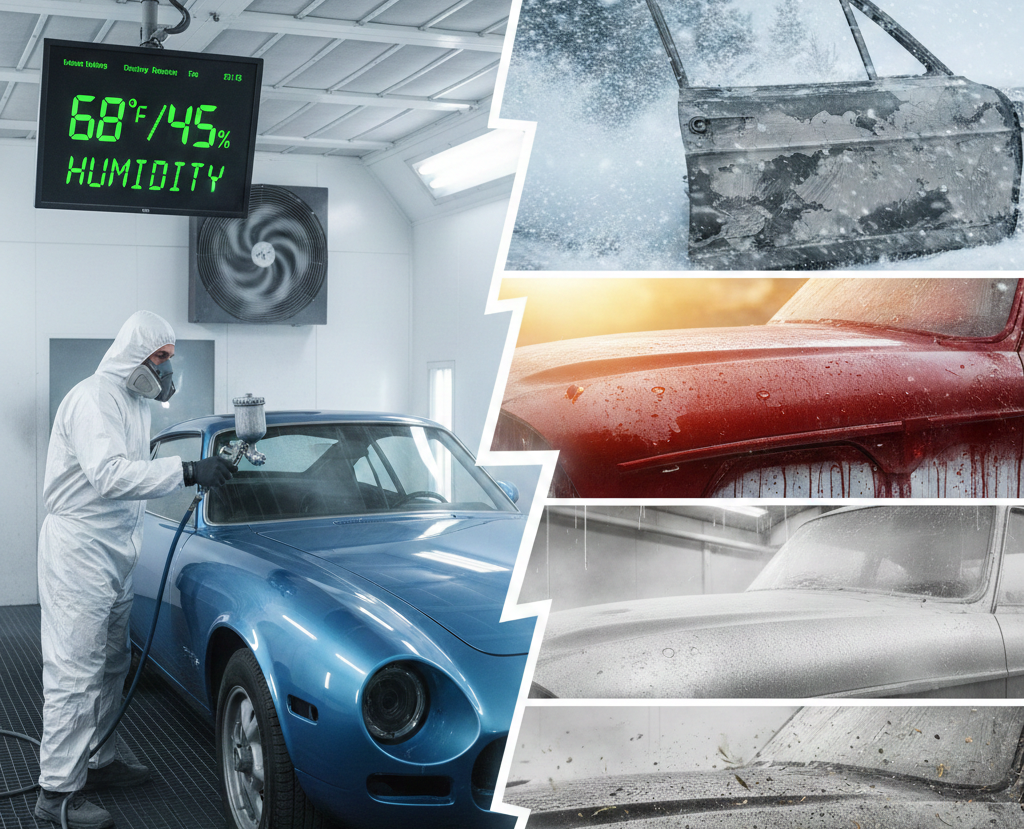
How Weather Affects Your Automotive Base Coat Paint Application
Why Weather Conditions Matter in Automotive Painting
Automotive paint systems are formulated to perform within specific environmental ranges. The base coat layer is especially sensitive because it determines the color, metallic effect, and visual depth of the finish. If the weather conditions are outside the recommended range, the paint may not atomize, flow, or cure properly.
Most paint manufacturers specify ideal application conditions, typically around 65 to 80 degrees Fahrenheit with moderate humidity. Deviating too far from these parameters can lead to defects such as peeling, bubbling, cracking, dullness, or uneven color distribution.
Understanding how each weather element affects your paint job will help you plan more effectively and avoid costly rework.
The Impact of Temperature on Base Coat Application
Temperature is one of the most important factors in paint performance.
Cold Weather Challenges
When temperatures drop too low, several issues can arise:
- Slower evaporation of solvents
- Poor paint flow and leveling
- Increased risk of runs and sags
- Improper curing
Cold temperatures cause the paint to thicken, making it harder to atomize properly through the spray gun. This can result in a rough texture or orange peel effect. Additionally, if the base coat does not flash correctly between coats, adhesion problems may occur later.
If you must paint in cooler weather, consider using temperature-appropriate reducers and ensuring the vehicle and workspace are preheated to recommended levels.
Hot Weather Complications
High temperatures present a different set of problems:
- Paint drying too quickly
- Dry spray texture
- Poor blending
- Increased solvent popping
When it is too hot, solvents evaporate rapidly before the paint has time to level out. This can create a grainy surface or uneven metallic distribution. Fast drying also reduces working time, making it difficult to correct errors.
In hot conditions, slower reducers and proper ventilation can help maintain control over the application process.
Humidity and Its Effects on Paint Performance
Humidity refers to the amount of moisture in the air. It plays a major role in how paint cures and adheres to surfaces.
High Humidity Problems
Excess moisture in the air can cause:
- Blushing or cloudy appearance
- Adhesion issues
- Extended drying times
- Trapped moisture beneath the surface
High humidity interferes with solvent evaporation and can lead to moisture contamination. In extreme cases, moisture can become trapped between layers, compromising long-term durability.
Using moisture separators in your air compressor system is essential when spraying in humid conditions. Dehumidifiers in your workspace can also help maintain better control.
Low Humidity Concerns
While low humidity is generally more manageable, it can increase static electricity. Static attracts dust and debris, which can settle into the wet base coat and create imperfections. Proper cleaning and anti-static measures help reduce contamination.
Wind and Airflow Considerations
Air movement is often underestimated but can significantly affect your paint application.
Outdoor Painting Risks
Painting outdoors exposes your project to:
- Dust and debris contamination
- Inconsistent drying
- Uneven spray patterns
Wind can cause overspray to drift away from the surface, reducing transfer efficiency and wasting material. It can also introduce airborne particles that ruin the finish.
For best results, base coat application should take place in a controlled environment such as a spray booth. If outdoor painting is unavoidable, choose calm days and create wind barriers to reduce exposure.
Indoor Ventilation Balance
Proper airflow inside a garage or shop is equally important. Adequate ventilation removes overspray and solvent vapors while preventing excessive air turbulence that can disturb the paint surface.
Balancing airflow ensures even drying and consistent results.
Seasonal Weather Changes and Long Term Planning
Each season presents unique challenges for automotive painting.
Winter Conditions
Cold temperatures and higher moisture levels make winter particularly challenging. Heating systems can help regulate temperature, but uneven heating may create temperature gradients that affect drying consistency.
Allow sufficient time for materials, equipment, and vehicle panels to reach the same temperature before application.
Summer Conditions
Summer heat increases evaporation rates and can cause panels to become excessively hot, especially if exposed to direct sunlight. Hot metal surfaces accelerate solvent flash-off, leading to poor flow and blending issues.
Shading the vehicle and painting during cooler parts of the day can improve results.
Spring and Fall Variability
Transitional seasons often bring fluctuating temperatures and humidity levels. Monitoring weather forecasts and checking environmental conditions before beginning your project can prevent unexpected complications.
How Weather Influences Flash Time and Curing
Flash time refers to the period between coats that allows solvents to evaporate properly. Curing is the full chemical process that hardens and stabilizes the paint film.
Weather conditions directly influence both stages.
- Cold slows evaporation and extends flash time
- Heat shortens flash time
- High humidity delays solvent release
- Poor airflow traps vapors
Ignoring recommended flash times can result in solvent entrapment, wrinkling, or lifting. Always adjust your timing according to the temperature and humidity of your environment.
Protecting Your Paint Job From Weather Related Defects
To ensure a successful application of automotive base coat, follow these best practices:
- Monitor temperature and humidity with accurate gauges
- Use manufacturer recommended reducers for specific conditions
- Store paint materials in climate controlled environments
- Preheat panels and workspace when necessary
- Use proper filtration and moisture separators
- Maintain a clean, enclosed painting area
Preparation and environmental awareness are just as important as technique.
For those seeking professional quality materials and guidance, selecting a trusted supplier is critical. When working with automotive base coat products, always verify compatibility with your clear coat system and adhere to product data sheets.
If you are researching premium materials, understanding how to properly apply automotive base coat in varying conditions will help maximize performance and longevity.
The Role of Surface Preparation in Different Weather
Weather also impacts surface preparation steps such as sanding, cleaning, and priming. Moisture can interfere with adhesion promoters, while cold surfaces may retain condensation.
Before spraying, ensure the surface is completely dry and free from contaminants. Wipe down panels with appropriate cleaners and allow adequate time for evaporation.
Surface temperature should match the ambient temperature to avoid condensation forming during the painting process.
Final Thoughts on Weather and Automotive Base Coat Application
Weather is a powerful variable that directly influences the success of your automotive paint project. Temperature, humidity, airflow, and seasonal changes all affect how the base coat sprays, flashes, and cures.
Using automotive base coat can significantly enhance the final appearance and durability of your vehicle’s paint job. It’s crucial to choose high-quality materials and follow proper application techniques for the best results. By combining technical skill with environmental awareness, you can prevent defects and achieve a smooth, professional finish.
Careful planning, proper equipment, and close attention to weather conditions will ultimately determine the longevity and visual impact of your paintwork.
Frequently Asked Questions
What is the ideal temperature for applying automotive base coat?
Most manufacturers recommend applying base coat between 65 and 80 degrees Fahrenheit. Always check the product technical data sheet for precise guidelines.
Can I apply base coat paint in high humidity?
Yes, but it requires proper moisture control. Use air compressor moisture separators and consider dehumidifiers in enclosed spaces to prevent contamination.
Why does my paint look cloudy in humid weather?
Cloudiness, often called blushing, occurs when moisture becomes trapped in the paint film during evaporation. Lower humidity levels and improved airflow help prevent this issue.
How long should I wait between coats in hot weather?
Hot weather reduces flash time, but do not rush the process. Follow manufacturer recommendations and adjust slightly based on temperature conditions.
Is it safe to paint a car outside?
It is possible but not ideal. Outdoor painting increases the risk of contamination from wind, dust, and fluctuating weather conditions. A controlled indoor environment provides better results.