Best Exercises to Combine With Back Decompression Naples Treatment
Understanding Back Decompression Therapy
Spinal decompression therapy is a gentle, non-invasive treatment designed to stretch the spine and relieve pressure on discs and nerves. It is commonly used to address conditions such as herniated discs, sciatica, degenerative disc disease, and chronic lower back pain.
When paired with guided exercises, decompression therapy becomes even more effective. Movement helps improve circulation, enhances spinal alignment, and supports the healing process initiated during treatment.
Why Exercise Matters During Treatment
While decompression therapy reduces pressure on the spine, exercise helps stabilize and strengthen it. Without proper muscle support, the spine may continue to experience stress, leading to recurring discomfort.
Benefits of combining exercise with therapy include:
- Improved posture and alignment
- Increased flexibility and range of motion
- Strengthened core muscles
- Reduced risk of re-injury
- Faster recovery times
A structured plan that includes both therapy and exercise is often recommended by professionals offering back decompression Naples services.
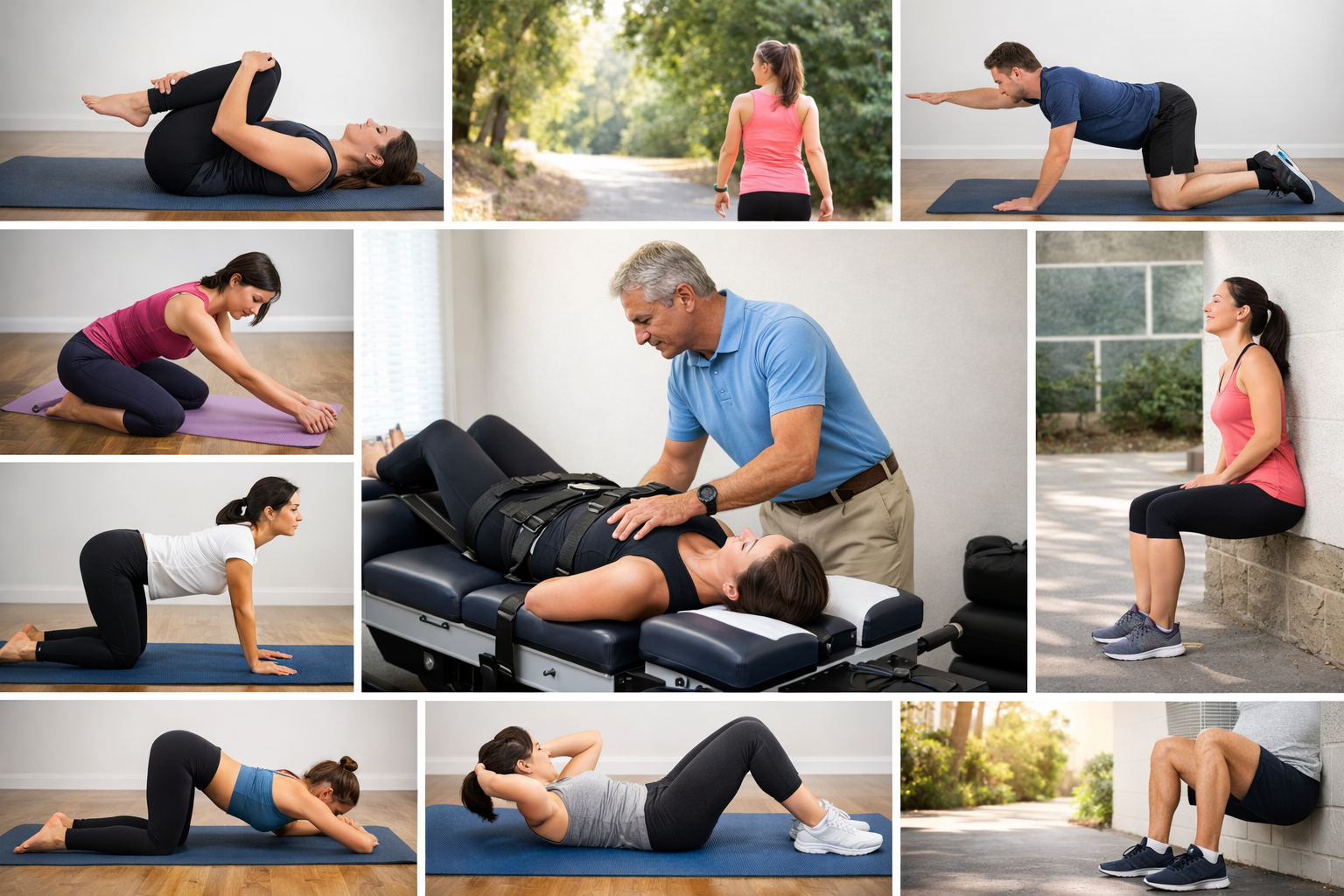
Pelvic Tilt Exercise
Pelvic tilts are simple yet effective for strengthening the lower back and abdominal muscles.
To perform this exercise:
- Lie on your back with knees bent and feet flat on the floor
- Tighten your abdominal muscles
- Flatten your lower back against the floor
- Hold for five seconds and release
This movement helps stabilize the spine and is ideal for beginners undergoing decompression therapy.
Knee to Chest Stretch
This stretch targets the lower back and helps relieve tension after decompression sessions.
Steps:
- Lie on your back
- Bring one knee toward your chest
- Hold for 15 to 30 seconds
- Switch legs and repeat
This exercise gently stretches the lumbar spine and reduces stiffness.
Cat Cow Stretch
A popular movement in flexibility routines, the cat cow stretch improves spinal mobility and circulation.
How to do it:
- Start on your hands and knees
- Arch your back upward while tucking your chin
- Then drop your belly and lift your head
Repeat this motion slowly for several repetitions. It complements decompression therapy by keeping the spine flexible.
Bird Dog Exercise
This exercise strengthens the core and improves balance, both essential for spinal support.
Instructions:
- Begin on hands and knees
- Extend one arm forward and the opposite leg backward
- Hold for a few seconds
- Switch sides
The bird dog exercise enhances coordination and reduces strain on the lower back.
Partial Crunches
Strengthening the abdominal muscles helps protect the spine and maintain alignment.
To perform:
- Lie on your back with knees bent
- Cross arms over your chest
- Lift your shoulders slightly off the floor
- Hold briefly and return down
Avoid full sit-ups, as they can place unnecessary stress on the spine during recovery.
Hamstring Stretches
Tight hamstrings can contribute to lower back pain. Stretching them regularly improves flexibility and reduces tension.
Steps:
- Sit on the floor with one leg extended
- Reach toward your toes without forcing
- Hold for 15 to 30 seconds
Repeat on both sides to maintain balance.
Wall Sits
Wall sits are excellent for building lower body strength without putting pressure on the spine.
How to do it:
- Stand with your back against a wall
- Slide down into a seated position
- Hold for 10 to 30 seconds
This exercise strengthens the legs and core, supporting overall spinal stability.
Bridges
Bridges activate the glutes and lower back muscles, promoting better posture.
Instructions:
- Lie on your back with knees bent
- Lift your hips toward the ceiling
- Hold for a few seconds
- Lower slowly
This movement complements decompression therapy by reinforcing the muscles around the spine.
Walking and Low Impact Cardio
In addition to targeted exercises, low impact activities like walking can improve circulation and promote healing.
Benefits include:
- Increased blood flow to spinal tissues
- Improved endurance
- Reduced stiffness
Walking is often recommended by a Naples Chiropractor as part of a recovery plan.
Tips for Safe Exercise During Treatment
When combining exercise with decompression therapy, safety is essential. Follow these guidelines:
- Always consult your chiropractor before starting new exercises
- Begin with low intensity movements
- Avoid sudden or jerky motions
- Stop if you experience pain or discomfort
- Maintain proper form throughout each exercise
Consistency is key, but overexertion can slow progress.
Creating a Balanced Routine
An effective routine should include:
- Stretching exercises for flexibility
- Strength training for core support
- Low impact cardio for circulation
Working with professionals who specialize in back decompression Naples care ensures your program is tailored to your specific condition and goals.
Long Term Benefits of Combining Exercise and Therapy
When done correctly, combining exercise with decompression therapy offers long-lasting benefits:
- Reduced chronic pain
- Improved posture
- Greater mobility
- Enhanced quality of life
Patients who stay consistent with both treatment and exercise often experience better outcomes than those who rely on therapy alone.
Conclusion
Back pain does not have to control your life. By combining spinal decompression therapy with targeted exercises, you can strengthen your body, improve flexibility, and support long-term healing. Whether you are just beginning treatment or looking to enhance your results, incorporating these exercises can make a significant difference.
If you are exploring options for back decompression Naples, working with an experienced Naples Chiropractor can help you develop a personalized plan that delivers lasting relief.
FAQs
What is spinal decompression therapy?
It is a non-surgical treatment that gently stretches the spine to relieve pressure on discs and nerves.
Can I exercise during decompression therapy?
Yes, but exercises should be approved by your chiropractor to ensure safety and effectiveness.
How often should I do these exercises?
Most patients benefit from performing them several times a week, depending on their condition.
Are these exercises suitable for everyone?
While many are beginner friendly, it is important to consult a professional for personalized guidance.
How long does it take to see results?
Results vary, but many patients notice improvements within a few weeks when combining therapy and exercise.