How to Stay Safe While Waiting for Emergency Tree Removal
A damaged or fallen tree can create serious hazards around your home or property. Severe weather, strong winds, lightning, disease, or weakened roots can cause trees to break, lean, or fall without warning. When a tree becomes an immediate safety concern, professional emergency tree removal may be necessary.
However, there can be a waiting period between contacting a tree service and the arrival of the crew. During this time, homeowners should focus on reducing risks and keeping everyone away from dangerous areas. Knowing what to do while waiting can help prevent injuries, additional property damage, and unnecessary complications.
Recognize the Dangers of a Damaged Tree
Before taking any action, assess the situation from a safe distance. A damaged tree may look stable while actually being under significant tension. Broken limbs can fall unexpectedly, while partially uprooted trees can shift because of changes in wind or ground conditions.
Look for visible warning signs such as:
- Large branches hanging loosely
- Cracks in the trunk or major limbs
- A tree leaning toward a house, driveway, or road
- Exposed or damaged roots
- Split trunks
- Power lines touching or near the tree
- Broken branches suspended above walkways or vehicles
If you notice these conditions, do not approach the tree unnecessarily. Even small movements or vibrations can cause unstable branches to fall.
Keep People and Pets Away
One of the most important steps is creating a safe distance around the affected tree. Children and pets may not understand why a damaged tree is dangerous, so keep them inside or in another secure area until professionals arrive.
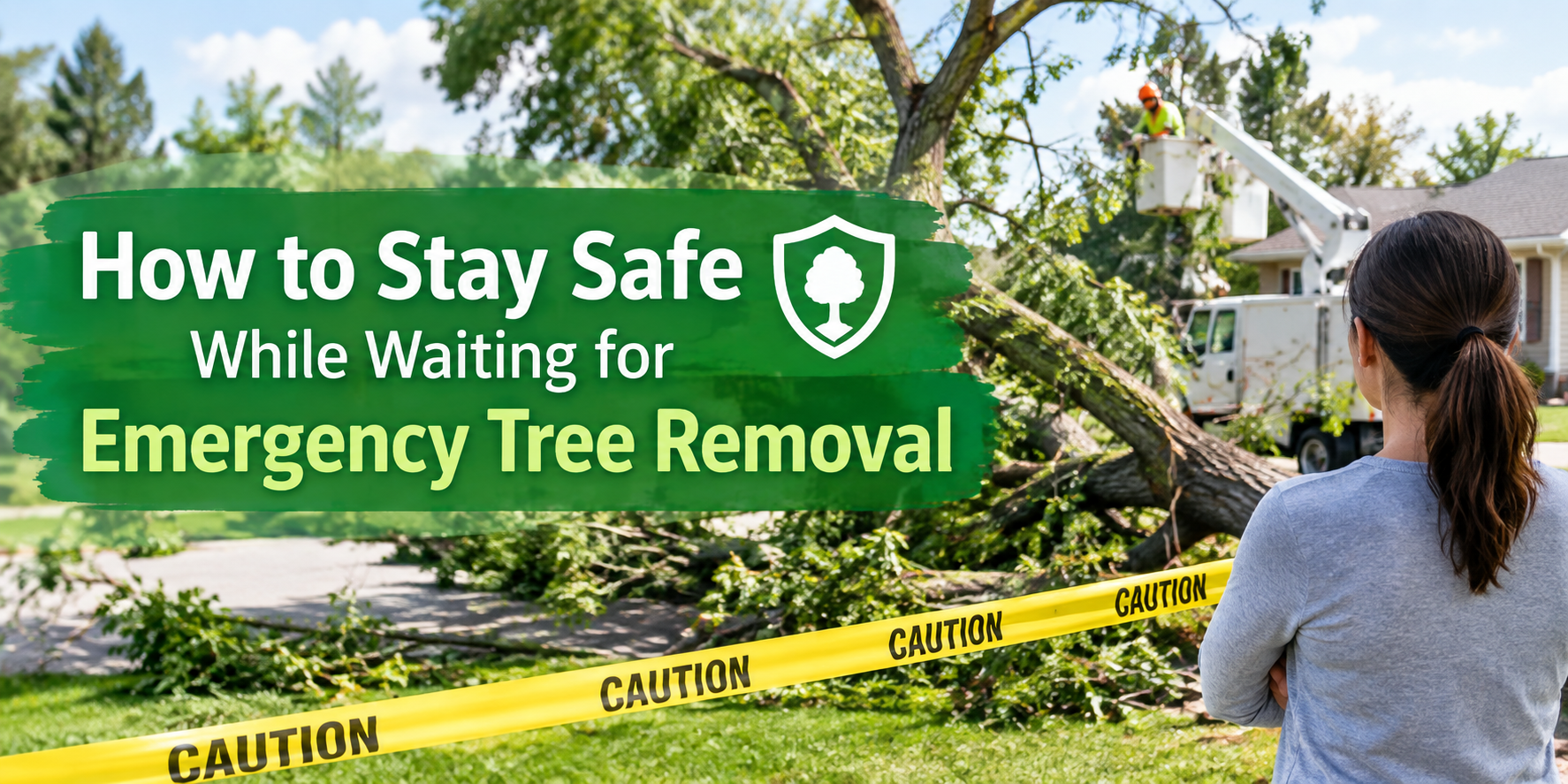
Emergency tree removal safety starts with keeping people, pets, and vehicles away from the affected area. Homeowners should avoid cutting branches or moving the tree on their own because unstable trees can shift unexpectedly.
Use doors, gates, temporary barriers, or other safe methods to prevent people from entering the danger zone. If possible, communicate clearly with family members about the situation so everyone understands that the area is off-limits.
Stay Away From Downed Power Lines
A fallen tree involving electrical wires presents an especially serious hazard. Never touch a downed power line, even if it appears inactive. Electricity can travel through branches, standing water, fencing, vehicles, and other conductive materials.
If a tree has fallen onto or near power lines, stay well away from the area and contact the appropriate utility company or emergency service. Do not attempt to remove branches from the wires or determine whether the line is energized.
Avoid Using Tools Near the Tree
Chainsaws, ladders, ropes, and other equipment can make an already dangerous situation worse. Cutting a branch that is under pressure can cause it to move suddenly. A partially fallen tree can also shift when weight is removed from one side.
Leave cutting and removal work to trained professionals with the appropriate equipment and experience. Your priority while waiting should be keeping everyone safe rather than trying to speed up the removal yourself.
Protect Your Home Without Approaching the Tree
A damaged tree may threaten your roof, windows, vehicles, or other structures. However, protecting property should not involve putting yourself in danger.
If there is no immediate risk to your safety, you can move vehicles or outdoor belongings that are clearly outside the danger zone. Do not walk beneath hanging branches or approach a tree that is leaning toward your property.
If the tree has already damaged your roof or another part of your home, avoid entering areas that may be structurally compromised. Take photographs from a safe location if you need documentation for an insurance claim.
Watch for Changing Weather Conditions
Weather can make a dangerous tree even less predictable. Strong winds, heavy rain, lightning, or additional storms can cause branches to fall or increase movement in an unstable tree.
Monitor local weather conditions while waiting for the tree service. If another storm is approaching, remain indoors and avoid going outside to inspect the tree.
Do not assume that a tree that appeared stable earlier will remain stable throughout changing weather conditions.
Do Not Park Near the Damaged Tree
Vehicles should be moved away from the affected area when it can be done safely. A falling branch can cause significant damage to cars, trucks, motorcycles, and other vehicles.
If a vehicle is already trapped beneath a fallen tree or surrounded by branches, do not attempt to retrieve it until professionals determine that the area is safe. Property can be replaced, but attempting to save a vehicle can expose you to unnecessary danger.
Contact the Right Professionals
When a tree poses an immediate hazard, contact a qualified tree service as soon as possible. Explain the situation clearly when making the call. Mention whether the tree has fallen, whether it is leaning, whether branches are hanging over a structure, and whether power lines are involved.
Photos taken from a safe distance may help the tree service understand the situation before arriving. Be honest about any hazards you can see so the crew can prepare appropriate equipment.
Explain the Most Urgent Risks
When speaking with the tree removal company, prioritize safety information. Tell them if the tree is:
- Resting against a house
- Blocking an entrance or roadway
- Near electrical lines
- Partially uprooted
- Suspended over a vehicle
- Showing major cracks or splits
- Located where people regularly walk
This information can help professionals determine how the situation should be approached.
Know When to Leave the Property
In some situations, staying inside the home may not be enough. If a tree is pressing against the structure, has caused major structural damage, or appears likely to collapse further, follow guidance from emergency responders or other qualified professionals.
If evacuation is recommended, leave using a safe route that does not pass beneath the damaged tree or through areas where branches may fall.
Never remain near a hazardous tree simply because you are waiting for the removal company. Safety should come first.
Avoid DIY Emergency Tree Removal
Removing a large or unstable tree is not the same as ordinary yard maintenance. Professionals must consider the direction of the tree, branch weight, tension, surrounding structures, utility lines, equipment access, and other hazards.
Trying to handle the problem yourself can result in serious injury or additional property damage. Even cutting what appears to be a small branch can change the balance of a damaged tree.
Professional tree removal crews have specialized equipment and training for managing hazardous trees. Waiting for qualified assistance is often the safest option.
FAQs About Emergency Tree Removal Safety
What should I do if a tree is leaning toward my house?
Keep everyone away from the affected area and contact a professional tree removal service. Do not attempt to push, pull, or cut the tree yourself.
Is it safe to walk underneath a damaged tree?
No. Hanging branches can fall without warning, particularly during wind or rain. Avoid walking underneath or close to a damaged tree until professionals have inspected it.
What if the tree is touching a power line?
Stay away and contact the utility company or emergency services. Never touch the tree, branches, wires, or anything that may be in contact with them.
Can I cut small branches while waiting for tree removal?
It is generally safer to leave damaged branches alone, especially when they are attached to an unstable tree. Professionals can determine which branches can be safely removed.
Should I move my car if a tree is damaged nearby?
If you can move the vehicle without entering the danger zone, relocating it may reduce the risk of property damage. Never approach a dangerous tree just to retrieve or move a vehicle.
Conclusion
Waiting for emergency tree removal can be stressful, especially when a damaged tree is close to your home or vehicles. The safest approach is to avoid unnecessary contact with the tree, keep people and pets away, stay clear of power lines, monitor changing weather, and wait for trained professionals to handle the removal.
A damaged tree can shift unexpectedly, so attempting a quick DIY solution may create additional hazards. By keeping the area clear and communicating the risks to your tree service provider, you can help protect your family, property, and neighbors while waiting for professional assistance.