
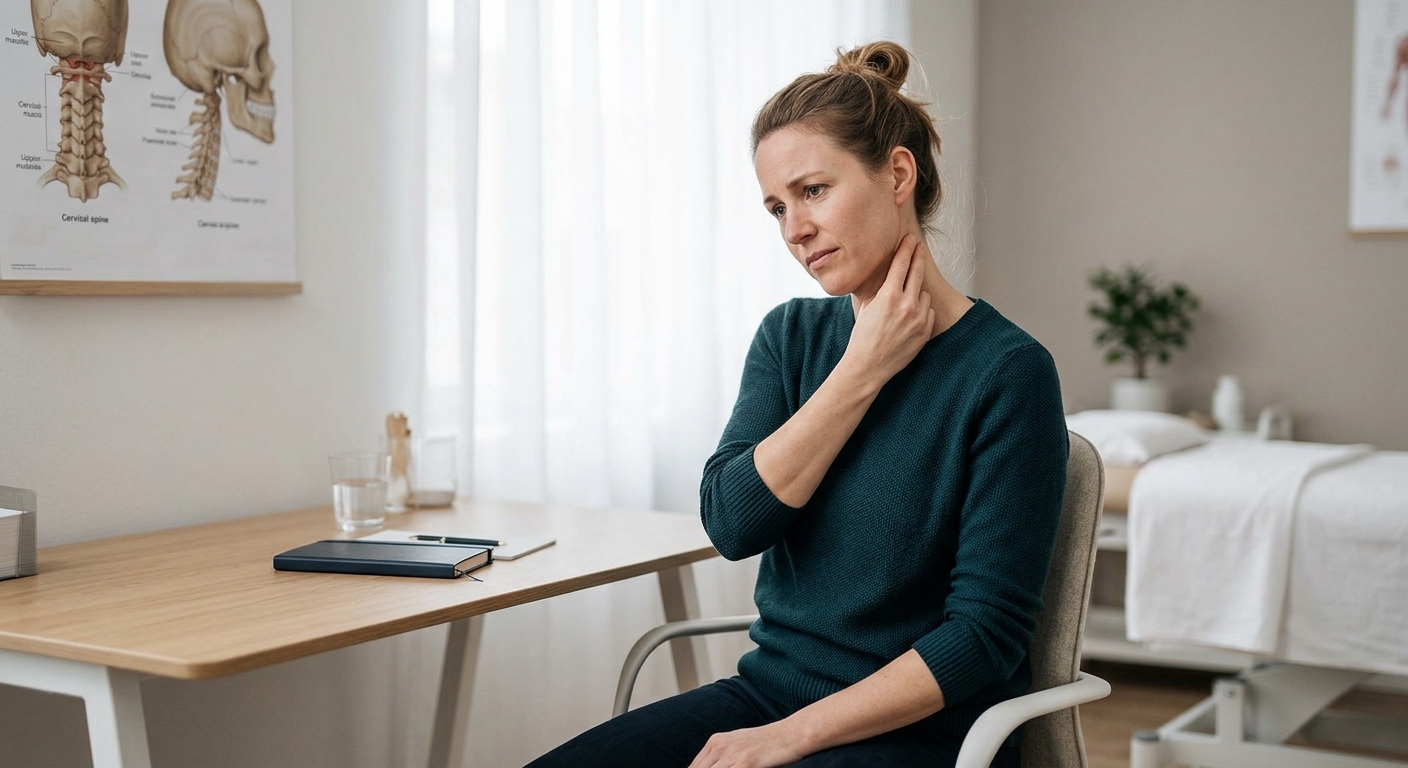
Cervicogenic Headache: When Neck Problems Cause Head Pain
What Is a Cervicogenic Headache?
A cervicogenic headache occurs when pain originates from a structure in the cervical spine but is perceived in the head. This is known as referred pain. The upper cervical region contains joints, ligaments, nerves, muscles, and other pain-sensitive structures that can contribute to head pain.
Unlike a primary headache disorder, where the headache itself is the main condition, a cervicogenic headache is associated with an underlying problem involving the neck. Potential contributors can include neck injuries, whiplash, arthritis, disc problems, irritated nerves, and other cervical spine disorders.
The pain is often one-sided, although symptoms can vary. Some people experience discomfort beginning around the upper neck or back of the head before it spreads toward the forehead, temple, or area behind the eye.
Importantly, having neck pain and a headache does not automatically mean that the headache is cervicogenic. Migraine can also cause neck pain and stiffness. A proper assessment is therefore important before assuming that the cervical spine is the source.
Common Symptoms of a Cervicogenic Headache
Symptoms can differ from one person to another, but several patterns may suggest a cervical contribution.
A cervicogenic headache may involve:
- Pain primarily on one side of the head
- Pain beginning at the base or back of the skull
- Pain spreading toward the forehead, temple, or behind the eye
- Neck stiffness or discomfort
- Reduced cervical range of motion
- Head pain that becomes worse with certain neck movements
- Tenderness around particular areas of the neck
- Headaches associated with a known neck injury or cervical condition
Some people may have significant head pain without experiencing obvious neck pain at the same time. This can make the condition more difficult to recognize.
How Neck Problems Can Cause Head Pain
The cervical spine contains structures that communicate with sensory pathways involved in head and facial pain. When tissues in the upper neck become irritated or dysfunctional, the brain may perceive the resulting pain in the head rather than solely at the original source.
This explains why someone can experience pain behind an eye or around the temple even when the underlying problem is located lower in the upper cervical region.
Neck injuries are one possible trigger. Whiplash, for example, can affect muscles, joints, ligaments, and other structures. Degenerative changes such as arthritis may also affect cervical structures and contribute to symptoms. Other possible causes include disc problems and nerve irritation.
Posture and repetitive activities can also contribute to neck discomfort. Spending long periods looking downward at a phone, working at a computer, or maintaining an awkward head position can place additional demands on the neck. These factors do not automatically establish a diagnosis of cervicogenic headache, but they can be relevant when evaluating a person’s overall symptoms.
Cervicogenic Headache vs. Migraine and Tension Headache
One of the biggest challenges is distinguishing a cervicogenic headache from other common headache types.
Migraine can cause intense head pain and may be accompanied by nausea, vomiting, light sensitivity, sound sensitivity, visual symptoms, and other neurological features. Neck pain is also common during migraine attacks, so neck discomfort alone does not prove that the headache originates in the cervical spine.
Tension-type headaches can produce pressure or aching around the head and may also involve tightness in the neck and shoulders. In contrast, a cervicogenic headache is associated with evidence that a cervical structure or disorder is contributing to the headache.
A useful way to think about the distinction is not simply where the person feels pain, but what consistently triggers or influences it.
The key considerations include how a cervicogenic headache differs from a migraine or tension headache, the exam findings that point to a cervical origin, and the care options that follow.
For example, reduced neck mobility and reproduction or worsening of the familiar headache with certain neck movements may support a cervical contribution. However, these findings must be interpreted in the context of the entire clinical picture.
Examination Findings That May Point to a Cervical Origin
A physical examination can provide important information when evaluating a suspected cervicogenic headache.
A healthcare professional may assess cervical range of motion, posture, muscle function, tenderness, joint movement, and neurological findings. They may also examine whether particular neck movements reproduce the patient’s familiar head pain.
Reduced cervical range of motion and headache aggravation with certain neck movements are commonly associated with cervicogenic headache.
The examination is also useful for identifying signs that suggest another cause. Depending on the symptoms and medical history, additional testing may be considered. Imaging such as X-rays, CT scans, or MRI can help identify certain structural problems, although an imaging study does not necessarily establish that a particular abnormality is causing the headache. Functional findings from the physical examination remain important.
This is one reason a thorough evaluation should look beyond a scan and consider how the cervical spine functions during movement.
Treatment and Care Options
Treatment for a cervicogenic headache generally focuses on addressing the underlying cervical problem while improving comfort and function.
Physical therapy is commonly used. A treatment program may include mobility exercises, strengthening, posture education, manual techniques, and exercises designed to improve the coordination and endurance of the neck and upper back. The specific approach should be based on the individual’s examination findings and tolerance.
Other treatment options may include medications or targeted injections when clinically appropriate. In more persistent cases, specialized procedures may be considered. Surgery is generally reserved for specific underlying cervical conditions when less invasive approaches are not appropriate or have not provided adequate relief.
Chiropractic care may also be considered as part of a broader approach to musculoskeletal neck problems. If you are searching for a Chiropractor Naples, look for a qualified professional who performs a thorough assessment rather than assuming every headache is caused by the neck.
The goal should be more than simply reducing headache intensity. Effective care should address contributing factors, improve cervical function when appropriate, and help the patient return to normal daily activities.
When to Seek Professional Evaluation
Recurring headaches deserve attention, especially when their pattern changes or they interfere with daily activities.
A healthcare professional should evaluate headaches that are new, worsening, unusually severe, or associated with other concerning symptoms. Sudden severe headaches, headaches following a significant head or neck injury, or headaches accompanied by weakness, numbness, confusion, speech difficulties, balance problems, seizures, or significant vision changes require prompt medical attention.
People should also seek evaluation when persistent neck pain accompanies recurring headaches. A proper assessment can help determine whether the symptoms are related to the cervical spine, migraine, tension-type headache, another headache disorder, or a different medical condition.
Can Posture Contribute to Cervical Headaches?
Posture can influence how the neck and upper back are loaded during everyday activities. Prolonged slouching, forward-head positioning, or repetitive screen use may contribute to neck discomfort and stiffness.
However, posture should not automatically be blamed for every headache. Headache disorders can have multiple contributing factors, and neck pain can occur as part of migraine as well.
Instead of focusing on achieving a perfect posture all day, it can be more useful to vary positions regularly, take movement breaks, adjust workstations, and maintain appropriate strength and mobility.
Preventing Recurring Cervicogenic Headaches
Prevention depends on identifying the factors contributing to the headache. Maintaining cervical mobility, strengthening the neck and upper back when appropriate, using an ergonomic workstation, and avoiding prolonged static positions may support overall neck health.
After an injury, appropriate rehabilitation may also help restore movement and function. People with recurring symptoms should work with a qualified healthcare professional to identify specific contributing factors rather than relying on generic exercises alone.
A personalized plan can be especially important because two people with similar headache symptoms may have very different underlying causes.
The Importance of Finding the Source of Head Pain
A cervicogenic headache can be frustrating because the pain is felt in the head even though the contributing problem may be located in the neck. Recognizing this relationship can help guide a more appropriate evaluation and treatment strategy.
At the same time, neck pain does not automatically mean that a headache is cervicogenic. Migraine and other headache disorders can also involve the neck. A careful history and physical examination are therefore essential for determining the most likely source.
If cervical involvement is identified, care may focus on improving neck mobility, strength, function, and tolerance to daily activities. Depending on the underlying condition, physical therapy, medication, injections, chiropractic care, or other treatments may be considered.
For people experiencing recurring head pain with neck stiffness or restricted movement, discussing the symptoms with a qualified healthcare professional can be an important first step toward understanding the cause and finding appropriate care.
Frequently Asked Questions
What is a cervicogenic headache?
A cervicogenic headache is head pain that originates from a problem or disorder involving structures in the cervical spine or surrounding neck tissues. The pain is referred into the head rather than being felt only at its source.
What does a cervicogenic headache feel like?
It is often experienced on one side of the head and may begin around the upper neck or back of the skull before spreading toward the front of the head or behind the eye. Neck stiffness and reduced range of motion may also occur.
How is a cervicogenic headache different from migraine?
A migraine may involve symptoms such as nausea, vomiting, sensitivity to light or sound, and visual disturbances. A cervicogenic headache is associated with a cervical source and often has a relationship with neck movement or restricted neck mobility. However, neck pain can also be a symptom of migraine, so professional evaluation may be needed to distinguish them.
Can neck problems cause headaches?
Yes. Problems affecting structures in the cervical spine can produce referred pain into the head. Potential contributors include certain injuries, arthritis, disc problems, and nerve irritation.
Can physical therapy help a cervicogenic headache?
Physical therapy is commonly used to address cervical mobility, strength, movement patterns, and other contributing factors. The treatment program should be individualized according to the person’s examination findings and underlying condition.
Should I see a Chiropractor Naples provider for a cervicogenic headache?
A qualified chiropractic professional may be part of a multidisciplinary approach when the headache is associated with musculoskeletal problems of the neck. A proper assessment is important first to determine whether the symptoms are consistent with a cervical source and whether chiropractic care is appropriate.
When should I seek urgent care for a headache?
Seek prompt medical attention for a sudden, severe headache or a headache associated with neurological symptoms such as weakness, numbness, confusion, speech problems, seizures, significant balance problems, or major vision changes. Headaches following a significant head injury should also be evaluated.