Best Practices For Hiring Apply Rite Commercial Roofing
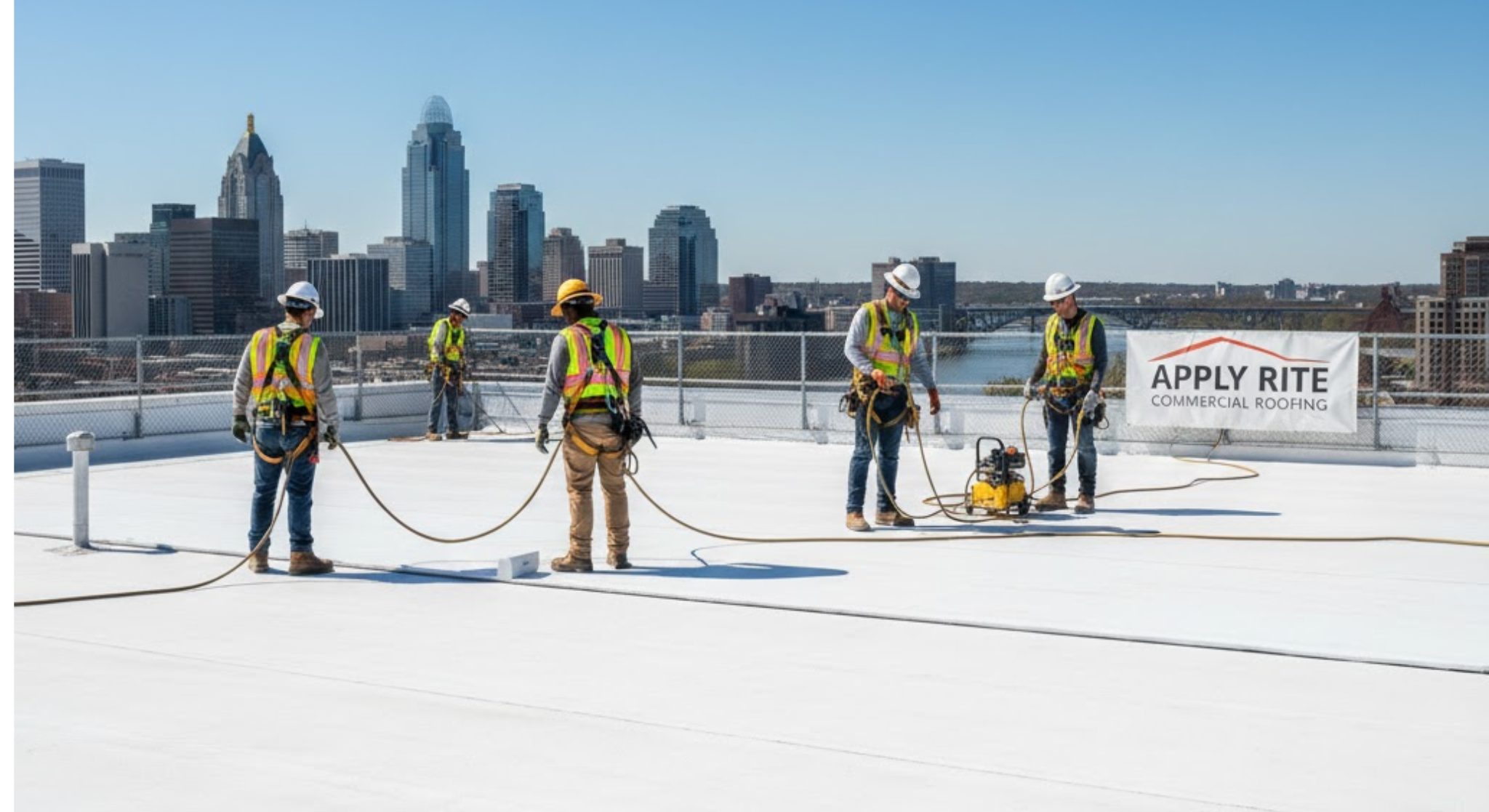
Maintaining a commercial facility in the Northern Kentucky and Greater Cincinnati area requires a strategic approach to property management. The roof is a building’s primary defense against the Ohio Valley’s volatile weather, where extreme temperature shifts can cause significant thermal stress on flat and low-slope systems. Whether you are facing an urgent leak or planning a full-scale restoration, choosing a specialized partner is vital. Clients trust Apply Rite Commercial Roofing for leak repairs, roof coatings, and complete installations backed by manufacturer warranties.
To ensure your investment is protected and your operations remain uninterrupted, follow these industry best practices when hiring your roofing partner.
1. Verify Specialized Commercial Expertise
Commercial roofing is a distinct discipline from residential work. It involves complex materials like TPO (Thermoplastic Polyolefin), EPDM (rubber), and specialized liquid-applied coatings.
- The Best Practice: Ensure your contractor has a proven track record specifically with commercial systems. Apply Rite specializes in the nuances of low-slope and flat roofing, which require precise drainage engineering and seam welding that residential-only roofers may not be equipped to handle.
- Why It Matters: Improperly installed commercial membranes can lead to “ponding water,” which adds immense weight to your structure and can void material warranties.
2. Prioritize Manufacturer-Backed Warranties
A “tailgate warranty” from a fly-by-night contractor is worthless if the company disappears. True security comes from a dual-layer protection system.
- The Best Practice: Look for Manufacturer Warranties that cover the materials and Workmanship Warranties that cover the installation labor.
- The Apply Rite Advantage: Because Apply Rite uses proven materials from reputable manufacturers, they can offer long-term protection that ensures if a material defect occurs, the manufacturer stands behind the repair costs.
3. Demand Comprehensive Insurance and Safety Documentation
Roofing is high-risk work. In the state of Kentucky, there is no state-level license required for roofers, making it your responsibility to vet their credentials.
- General Liability: Should be at least $1 million to protect your building from damage during construction.
- Workers’ Compensation: Ensures you are not held liable if a technician is injured on your property.
- The Best Practice: Request a Certificate of Insurance (COI) sent directly from the roofer’s insurance agent. Additionally, check for associations like the Kentucky Roofing Contractors Association (KRCA), which vets members for insurance and ethical standards.
4. Conduct a Detailed On-Site Evaluation
A professional should never provide a “ballpark” estimate based on satellite photos alone. A commercial roof has hidden layers that require physical inspection.
| Inspection Step | What it Reveals |
| Core Sampling | Identifies how many layers of roofing exist and if the underlying insulation is wet. |
| Infrared Scanning | Detects moisture trapped beneath the surface that is invisible to the naked eye. |
| Drainage Audit | Checks for clogged scuppers, gutters, and internal drains that could cause structural strain. |
Export to Sheets
- The Best Practice: Ask for a transparent, itemized proposal. Avoid “lump sum” bids that don’t specify the thickness of the membrane (mils) or the brand of coating being used.
5. Plan for Minimal Operational Disruption
For a business, a roofing project shouldn’t mean a shutdown. Professional crews prioritize communication to keep your facility functional.
- The Best Practice: Discuss logistics well in advance. Ask where the dumpster will be placed, how they will manage noise during business hours, and how they will secure the site daily to prevent debris from reaching your parking lot or customer entryways.
Conclusion
Your commercial roof is a major capital asset. By focusing on manufacturer-certified installations, local regional experience, and rigorous safety standards, you can turn a maintenance task into a long-term facility upgrade. Taking the time to vet your partner today prevents expensive emergency repairs tomorrow.
Frequently Asked Questions (FAQ)
Q: Can an old commercial roof be saved with a coating instead of a replacement?
A: Yes, if the underlying structure is dry. A high-quality roof coating can add 10–20 years of life to your roof at a fraction of the cost of a full tear-off, while also improving energy efficiency by reflecting UV rays.
Q: How often should my commercial roof be inspected?
A: Industry best practice is twice per year—once in the spring to check for winter ice damage and once in the fall to ensure drains are clear before snow season.
Q: Does Apply Rite offer emergency repair services?
A: Yes. Commercial property owners should look for partners that offer 24/7 emergency response to mitigate interior water damage and protect sensitive equipment or inventory.